
How we compute per-serving macros you can actually trust
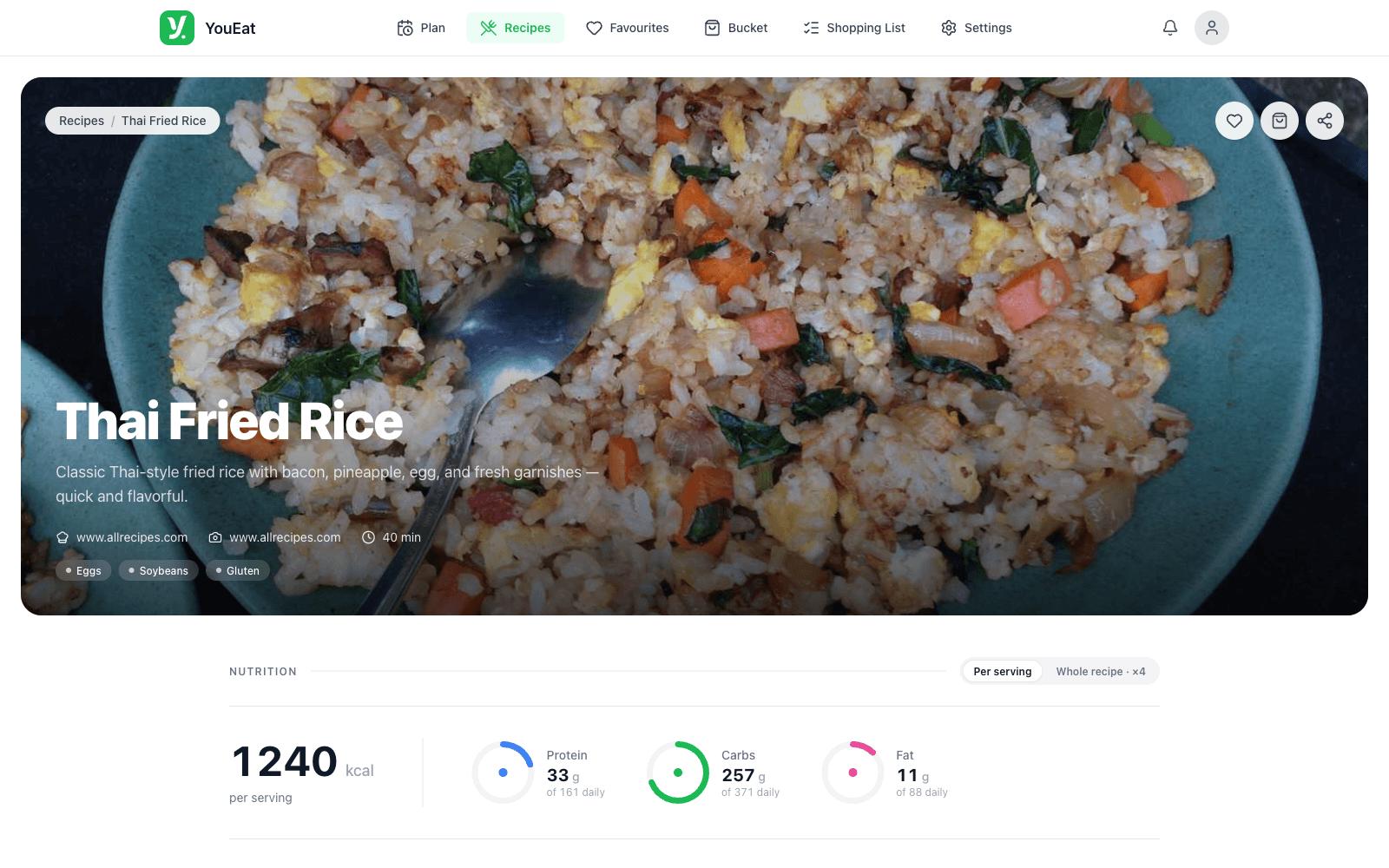
Every recipe card in YouEat shows calories and a macro trio per serving. Those numbers drive the whole plan — so they can't be decorative. Here's how we get from a list of raw ingredients to a figure we're willing to put a ring around.
Start from grams, never from “a cup”
Volume measures hide a lot of variance — a cup of flour can swing 20% by weight. We normalise every ingredient to grams first, then look up its nutrition density from a vetted food database. If a source only gives volume, we convert with an ingredient-specific factor rather than a generic one. It's slower to prepare a recipe this way, and it's the reason the numbers hold up.
What we account for
Three adjustments separate an honest figure from an optimistic one:
- ✓Cooking loss. Water and fat render off during cooking, concentrating everything else per gram.
- ✓Edible yield. Peels, bones and trim don't reach the plate, so they don't count toward a serving.
- ✓Portion scaling. Change the serving count and every figure — and the shopping list — recomputes.
“We'd rather show a number that's slightly conservative than one that's flattering and wrong.”
Nutrition data lead · YouEat
Where the macro trio comes from
Protein, carbs and fat each map to a colour you'll recognise across the app — the same trio that rings every plan and recipe. A typical serving breaks down like this:
The short version: the ring you see is the number we'd stake the plan on.